Sense of Decency

Listening to others, seeing things through their eyes.

STOP means STOP … doesn’t it?

By JIM McKEEVER

Our hurry-up society provides plenty of tests of civility and decency — mundane, everyday experiences and encounters that reveal a great deal about who we are as individuals and as a community.

Coffee shop lines.

Grocery store shopping carts.

Red lights and stop signs.

How are we doing?

That’s hard to quantify.

More important, what do we do — or not do — when we witness someone else behaving in a less than civil or decent manner?

A case study:

Every day for several weeks I have seen numerous drivers ignoring the stop sign at our corner during the morning when young children are walking to school. From my bird’s-eye view, I can see that these are not reckless teenagers whose frontal lobes haven’t developed. 

These are adults who should know better. 

Granted, our neighborhood has a stop sign at every corner, which can be annoying if you’re in a hurry. But they are a necessity in our very walkable neighborhood with two schools and two parks in a relatively small area. 

After watching — and videotaping — some blatantly dangerous driving, I called the local police department to request enforcement.

Nothing changed after the first try, so I called again a couple of weeks later and also wrote to local elected officials alerting them to the problem.

Patrol cars began showing up in the neighborhood, and finally the other morning an officer saw and pulled over one of the more flagrant violators.

Will getting a traffic ticket or a warning “cure” him? Probably not. 

But it can send the message that he’s not special, and that the rules apply to him, as well. Maybe he’ll behave, at least until the financial sting of a ticket wears off.

So the system can work — if you take the time and effort to pressure police and elected officials to take a community safety issue seriously. 

Certainly there are more pressing problems plaguing us these days, but if no one speaks up about something so basic, so potentially dangerous, then systems set up to ensure safety are destined to fail. 

And we’ll only become more angry and frustrated while the indecent behavior goes unchecked. 

My pursuit of community safety may seem a bit parochial and self-righteous, but much of what ails us as a society is the willingness to look the other way, to not get involved, and just complain or post snarky comments on social media. 

Here’s a challenge. 

Look around you. In your neighborhood, in your workplace, at community gatherings. 

If you see someone acting inappropriately (or dangerously), speak up. Maybe not right then and there, given the potential dangers of doing so in our gun-obsessed culture with so much anger simmering so close to the surface, but follow up later.

Notify the authorities (that’s what they’re there for — and what you pay taxes for). Call. Write. Speak up at a meeting of local government. Put it on the record.

If nothing happens, call and write again. Be a diplomatic nuisance.

Even better, if there are like-minded folks who witnessed what you did or simply support your view, organize and present a united front. Strength in numbers.

I can think of several times in my life when I stayed silent, didn’t speak up against injustice, greed, cruelty or a simple lack of decency. It still bothers me when I think back on those incidents years or decades later. 

So call out bad behavior, even if doing so is uncomfortable. We have to start somewhere. 

Jim McKeever is a co-founder of Sense of Decency.
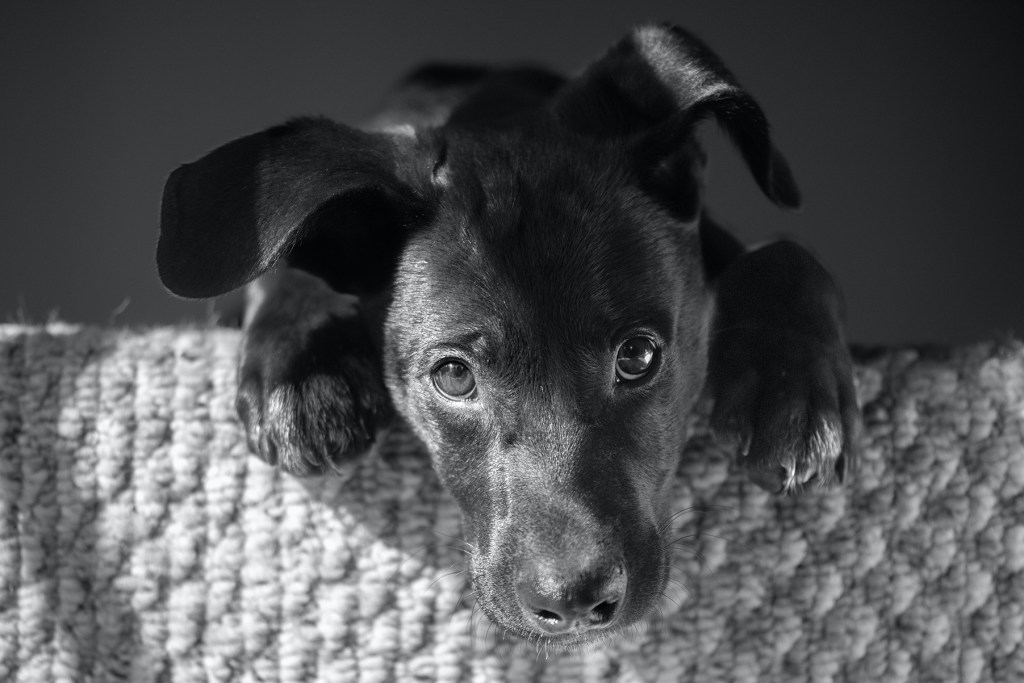
Hungry Howie. Photo © Michelle Gabel 2015.

By JIM McKEEVER

It was a few minutes after the pizza joint opened at 11 a.m. on a dreary Monday morning in Middle America.

I pulled the rental SUV into a parking space in the the empty lot, transferred a $5 bill from my wallet to my front pocket and pulled up a photo of my son’s dog on my phone.

I fully expected to get tossed as soon as I went in, a quick heave-ho.

Maybe the place has had trouble lately, and I had to push a red button next to the front door to enter. A woman behind the counter buzzed me in, probably wondering who the hell wants a slice of chain pizza at 11:05 on a Monday morning in Michigan.

I’ve never been good at first impressions, or second ones for that matter. No one’s ever accused me of being smooth.

“Can I help you?” asked the 40-ish woman, rote-like. (I’m also bad at guessing ages, so 40-ish may be way off).

I told her I didn’t want anything to eat and had a “strange request,” and started to tell her why I was there.

She looked annoyed, possibly worried. She really didn’t need a problem from some old dude first thing after opening up.

I told her that my son used to lived in the Midwest, had named his dog after the pizza chain, that the dog had recently had surgery and I was just hoping to bring back some napkins or something, anything, bearing the name of the chain, as a gift.

I didn’t have a photo of 7-year-old Howie wearing the “cone of shame” to keep him from messing with the surgery site, but I showed her my phone with an Instagram photo of him as an incredibly cute puppy, complete with a caption proving the origin of his name.

The woman absolutely melted.

“Oh no, what kind of surgery?”

“Torn ACL.”

“Poor baby! Our napkins are generic, but let me see what else I can find!”

With that, she went into overdrive, scurrying around the kitchen for whatever she could get her hands on, a cardboard drink carrier, packets of cheese and pepper — “Wait, you said you had grandkids? How many? We can’t leave them out!” — and coloring books and boxes of crayons.

“Do you want a bag for all of that?” she asked, then found one and happily pointed out that even the cheap plastic bag bore the name of the chain.

I thanked her profusely, handed her the $5 bill and told her she had made my day.

Back home a few days later, I gave my son and daughter-in-law the bag of goodies and relayed the story, adding details of the woman’s appearance and my curiosity about her — she was very, very thin and had no front teeth. I couldn’t help but think she has had a very tough life, no doubt struggling to make ends meet working in a pizza shop.

And here she was, bestowing kindness on some random person who didn’t even buy anything, gleefully conspiring in a surprise for people she didn’t know and will never meet.

Yes, she made my day. But as my son said, “You probably made hers, too.” 

I think he’s right. And that speaks volumes about this woman and the goodness within her, despite whatever assumptions people make based on her appearance or her occupation. When I think about this woman, all I remember is the pure joy she found in being kind.

In the end, nothing else matters.

Jim McKeever is a co-founder of Sense of Decency.
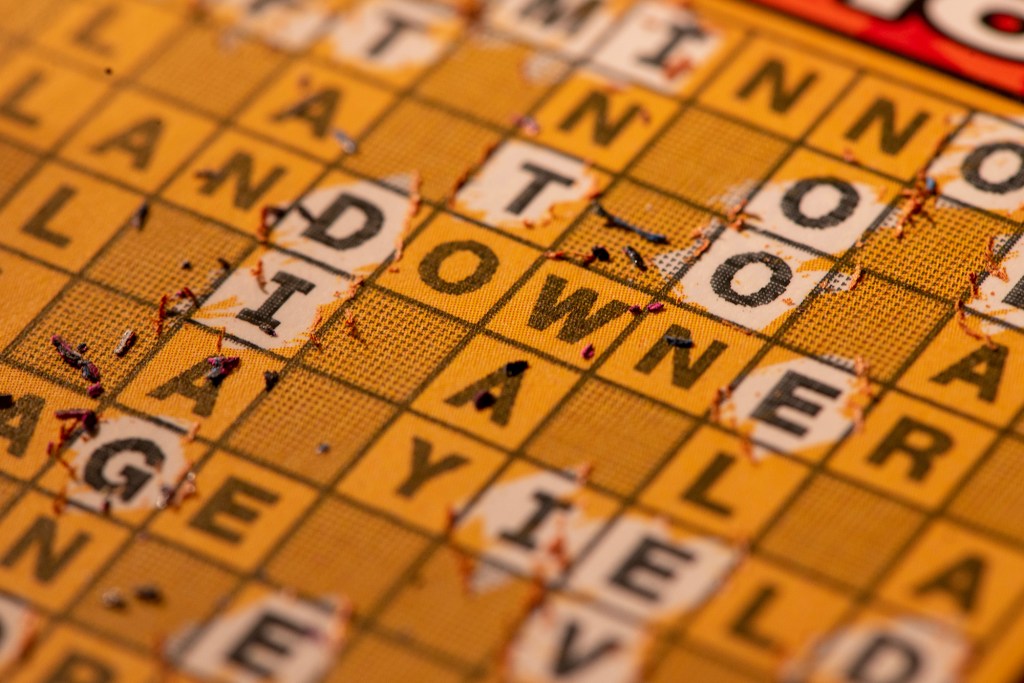
Photo illustration © Michelle Gabel

By JIM McKEEVER

The woman eases herself into a chair across from a man in the waiting room, sets her walker aside and goes into detail about her many surgeries.

 “I’ve been cut 24 times,” she says, launching into a laundry list of diseases, including diabetes, renal failure, fibromyalgia. She says she is 57, grew up in a city that didn’t have great medical care and worked cleaning offices and homes. 

She is tall and thin, after weight-loss surgery removed more than 100 pounds. She is grateful to be alive and prays regularly. She bemoans not being able to do the treadmill portion of the upcoming cardiac stress test, and has to endure an invasive alternative. During a quiet moment she pulls out a quarter and a scratch-off lottery ticket. She calls a transportation service to arrange a ride to the hospital for yet another operation next week.

The man, almost a decade older, has had only a few minor surgeries in his day, most the result of athletic pursuits he was able to enjoy with his disposable income and reasonable work schedule. He is retired and at the cardiologist out of an abundance of caution after some worrisome symptoms, knowing that he has very good health insurance and that extensive testing and visits will not bankrupt him. 

On the way to the appointment, he stopped at an ATM to withdraw cash for the parking garage and for an upcoming vacation. He doesn’t get a chance to say much to the woman, but is content to listen to her story.

What do you make of this scene? Did any opinions come to mind with each detail? Did you assign a skin color to each person? What assumptions did you make about the woman’s diabetes and weight-loss surgery … the scratch-off lottery ticket … her “unskilled” job as a cleaner? What about the man’s relatively good health? His disposable income? His upcoming vacation?

Are any of your thoughts or assumptions different from what they used to be? Or does this encounter further confirm what you’ve always felt or thought about certain classes of people?

It’s very easy to have a lack of empathy for the woman. She didn’t eat well, thinks prayer will fix everything, and come on — a lottery ticket? Aren’t they just a “stupidity tax”? Taxpayers are probably paying for your bad choices, so yes give some of it back. And stop whining, for crying out loud! 

As for the man, well, he took care of himself, ate well, exercised, held down a good job and deserves a vacation now and then.

Years ago I would have not been very empathetic toward the woman. 

But now, after seeing the bigger picture of our harsh society, I imagine her growing up in a food desert, in generational poverty, attending underfunded schools, subject to discrimination, racism and cruelty in every facet of her life. Playing the lottery? Why not, I used to. Prayer? Who am I to judge? Venting about every ache and pain? If it makes you feel better, I’ll listen. I’m stuck here with you and grateful for your story. 

As for the man, he has led a relatively privileged life, born White and male with a supportive family and educational opportunities. How would he have fared had the roles been reversed?

Of course, my empathy for the woman is in part based on assumptions. The reality of her lived experience probably includes some detrimental life choices along the way. But what societal factors went into those choices? How many of those choices were her “fault”?

What do you think?

Jim McKeever is a co-founder of Sense of Decency.

This year’s batch of Christmas cookies. Photo courtesy Mike Donohue.

By MIKE DONOHUE

I spend a lot of time grousing like the elderly Irish curmudgeon I am, but the truth is I’m a pretty happy guy.  There are really only a few things in life I hate — discrimination, injustice, and baking Christmas cookies.

The first are givens, but the cookies need a bit of explanation.  I think I got it from my mother.  She made them for us every year, and if there was one thing we looked forward to besides the arrival of Santa, it was Mom’s cherry-in-the-middle cookies.  It was hard work.  A professional baker I shared the recipe with once told me that it was the heaviest dough in the world to work with. 

Mom had an old-fashioned eggbeater, but it was no match for that dough that had the consistency of hard clay.  She had to use all her weight to mash it up with a heavy wooden mallet, stuff it into a cookie press, twist out the dough just right to form the cookies and fill the tray, then sprinkle them with green sugar, place a piece of cherry in the center and bake.

She tried to keep a smile on her face for us, but it got harder and harder as the batches went on.  The family got bigger.  We grew, and so did our appetites.  We married, and had children.  Every year there were more to be made, and the job got harder.  Every year she swore that it was too much, that this just had to be the last time. 

And then one year it was.

At her funeral, amidst his remarks about all the things we would miss, the priest mentioned Mom’s cookies, and how Christmas wouldn’t be the same without them … or without her.

A few months later, my siblings all got packages in the mail.  Collectively, they all cried when they opened them and saw her cookies.  I secretly had gotten her recipe and her cookie press from my Dad, and let her use my hands to continue that special token of love from her to us.

It’s been 28 years now since I took over her holiday bake, and subsequently faced the reality of my own mortality, hunting down duplicate presses for each of my siblings, so that they can continue the tradition with their families should I go first.  For many years I went to her grave the next day and laid a single cookie there as a token of thanks for the Mom she was. 

Twenty years later I began leaving two cookies, one for her, and one for my Dad, once he was finally with her again.

The project became a family event.  Deaths of people and of dreams have changed the lineup of my family, but my house was alive yesterday — alive with the smell of baking, the cussing of an old curmudgeon, the hard work of my sister, my son, and my granddaughter, and the joy of three generations singing along to the carols as we busied ourselves in the work of love for the family we are all blessed to have.  

I realized something in the midst of one of those yearly bakes.  I don’t hate baking Christmas cookies any more.  I hate how hard it is, but I love doing it, because as the day goes on, and the harder it gets, the more I realize how much my mom must have loved us, and I feel blessed to have a family to work equally as hard for.

My Dad loved those cookies the most of any of us.  He always wanted more of them than anyone else in the family.  I think he was proud of me for making them, and I’m glad he was the type of Dad who taught me the importance of taking care of the ones you love.  He didn’t have much of a family life growing up, and wanted more than anything to give Mom and us kids the life he never had. 

Without having to make so many for him, the bakes are a little shorter now … but it is somehow a lot harder to have to make less.  I miss you Mom and Dad, and thanks.  I’ll try to make you both proud.

Mike Donohue is a father, grandfather and friend who hopes for a better world for his family and loved ones to live in.  He is a licensed chemical dependency counselor, former professional musician, longtime cookie baker and political moderate, and has published articles related to local music, addiction recovery, and human rights.

A view from behind the border wall in Tijuana, Mexico, looking toward the United States. The U.S. Border Patrol has been detaining migrants outdoors between the wall and the “secondary fence” for up to 52 hours. The migrants have relied on allies to provide food, water and blankets passed through the steel bars of the wall. The Pacific Ocean is in the background. Photo © Jim McKeever.

By JIM McKEEVER

If you had the opportunity to provide comfort to a child, or a family, sleeping outside in the cold, you’d do whatever you could, right?

It’s what any decent human being would do.

Not the United States Border Patrol.

Here’s what’s been happening for weeks now at the US-Mexico border in Friendship Park, a historic patch of land between Tijuana and the southwest corner of California.

Border Patrol is forcing migrants — children, women and men — to stay outdoors overnight without giving them food, blankets or sufficient water. This has happened on at least three separate occasions in the past five weeks.

It gets cold at night in Tijuana in November, with temperatures dropping into the 40s. It rained one night while five men from Nicaragua were confined outdoors for 52 hours. A week ago several families from three different countries, with a total of eight children, built a small campfire to try to keep warm.

Allies on the Tijuana side have been handing migrants food, water and blankets through the steel bars of the wall and sharing photos and videos on social media. Border Patrol then began moving the migrants to less accessible and visible areas.

The agency has not explained its actions. I have left three voice-mail messages with Border Patrol’s Public Affairs office, to no avail.

Formal complaints to the Department of Homeland Security’s Office of Inspector General have gone unanswered. At least two of us contacted the office of U.S. Rep. Scott Peters on Friday to let him know what’s going on.

Why is Border Patrol doing this? It can’t be a capacity issue. Certainly the agency with a budget of $5 billion (with a ‘B’) can find somewhere to keep migrants and asylum seekers out of the elements.

It’s simply another example of the U.S. government’s long-standing “prevention through deterrence” policy, initiated in 1994 under the Clinton administration. 

The idea was to make crossing the border so difficult near official points of entry that migrants would either give up or try to cross via the unforgiving desert, which has since claimed the lives of untold thousands of migrants and asylum seekers. 

What U.S. officials and much of the American public refuse to accept is that migrants will keep coming. The lives they are fleeing are so dangerous or so hopeless, nothing is going to stop them.

Prevention through deterrence — or cruelty — won’t work. Migrants will risk their lives, the lives of their children, and will endure whatever cruelty or indignities the U.S. inflicts upon them for a chance at safety and freedom. As Somali-British poet Warsan Shire wrote, “You only leave home when home won’t let you stay.”

So what the Border Patrol is doing in Friendship Park is pointless. 

Unless, of course, cruelty is the point.

Which undoubtedly it is.

So, please … when you read or hear anything about “the border,” try not to think in abstractions like “Title 42” or cruel terms like “illegal alien.”

Rather, picture cold, frightened children sleeping outdoors without food, water or a blanket, forced to do so by U.S. government agents with badges and guns.

Ask the politicians you just voted into office, Democrat or Republican — many of whom posed for photos on election night, their own children dutifully lined up behind them — to picture their children being forced to sleep outdoors, cold, wet and scared.

Then ask them what they plan to do about it.  

Jim McKeever is a co-founder of Sense of Decency. He makes regular trips to the US-Mexico border to volunteer with different organizations aiding asylum seekers and other migrants.

Volunteers hike in the southern California desert to deliver gallons of water, food and supplies for migrants seeking a new life in the United States. Photo © Jim McKeever, Oct. 1, 2022.

By JIM McKEEVER

I heard many stories during a recent “water drop” in the desert with Border Kindness, a not-for-profit humanitarian aid organization in southern California. 

One in particular told by a fellow volunteer will stay with me. 

The story marked the beginning of the 34-year-old man’s transformation a quarter-century ago.

As a young boy in San Ysidro, Calif., Edgar went to elementary school less than a mile from the US-Mexico border, where it was common to have the equivalent of today’s active-shooter “lockdowns” — but because of migrants.

Once a month or so, Edgar said, an announcement would come over the PA system for students and teachers to shut themselves into classrooms and hide. Migrants crossing over from Tijuana had been seen cutting through the school grounds or a nearby neighborhood. 

Occasionally, Edgar and other students would see Border Patrol agents chasing them. “It was like cops and robbers,” Edgar said. “We’d be like, ‘Get ‘em!’”

That all changed one day when he was in third or fourth grade.

Edgar and some friends were playing outside when they saw a chase unfolding.

A young couple, the father carrying a 2-year-old like a football, and the mother carrying an infant, were running as fast as they could to escape a Border Patrol agent.

They reached a fence and the father climbed over with the 2-year-old. Just as the mother handed the baby over the fence to the father, the agent caught up with her, took her to the ground and restrained her. 

The father kept going, carrying both children.

“That’s when it changed for me,” Edgar said. 

His family eventually moved a little farther north to Chula Vista and then to Los Angeles, but he took that story with him.

Edgar’s commitment is such that on this particular Saturday he and his girlfriend drove down from LA on one hour of sleep, then drove a group of us two hours to the desert where we trekked five miles in almost 100-degree heat to drop water and supplies for migrants. 

Here’s how Edgar’s childhood memories and the water drop connect.

As a child, Edgar lived in an apartment not far from his school. One night he heard screaming and shouting in Spanish from somewhere nearby. Then he heard what sounded like someone breathing heavily outside his bedroom window. He looked out and saw a Latino man up pressing himself against the building, trying to avoid being seen by Border Patrol agents chasing a group through the night. 

Edgar and the migrant looked at each other at the same time, and the man took off running, perhaps more frightened than Edgar. 

The look in that man’s face came back to Edgar in the desert.

About halfway through our five-hour water drop, our group of 14 came upon nine migrants huddled together, hiding in a shady crevice in a canyon. They wore similar brown ponchos, which “entrepreneurs” in the borderlands sell on the streets to migrants looking to blend into the landscape. 

The nine, all from from Central America, were frightened when they saw us, thinking we were there to harm them or turn them in to Border Patrol. (There are vigilante groups out here that “hunt migrants,” so the fear was justified.)

We reassured them that we were there to help, and we gave them as much water and food as they needed. 

Later, Edgar said the look on the faces of the migrants hiding in the crevice took him back to his childhood and what he saw outside his bedroom window.

“It wasn’t cops and robbers anymore,” he said. “Who’s the bad guy here?”

Jim McKeever is a co-founder of Sense of Decency. He makes regular trips to the US-Mexico border to volunteer with different organizations aiding asylum seekers and other migrants.
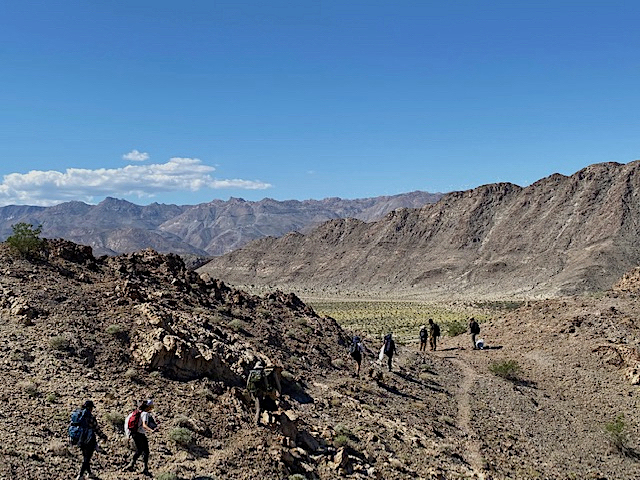
Photo © Dennis Harrod

“Are birds free from the chains of the skyway?”

— Bob Dylan

By DENNIS HARROD

I was behind a pickup truck the other day and it had a sticker on the back window that said “Freedom” and what looked like it might be an American flag. It was hard to tell. It had vertical stripes. And I made some assumptions.

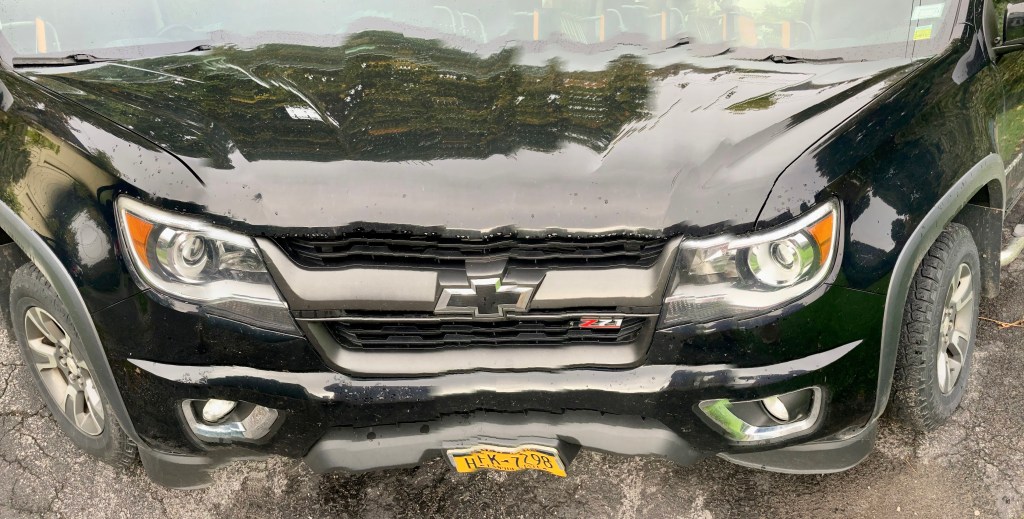
The driver must be a right-wing guy (it’s a pick-up truck after all and aren’t all drivers of pick-ups right-wing fanatics? Wait a minute. I drive a pick-up truck. A black one at that. Hmmm.)

Anyway, I began to ponder the word “freedom” and what it means to different people. What does it mean to you? Free to do as you please? Free to choose how to live your life? Free to exploit others at their peril?

Free for you but not for me because of my gender, skin color, language, sexual orientation, religion, political beliefs? Free to carry a gun wherever you want, regardless of your training or lack thereof, regardless of your mental state, regardless of past violent actions?

Continuing along my stereotyping path, the guy in the truck in front of me celebrates freedom, but possibly only for certain people who are worthy of the privilege. White people. Christians. “Patriots.” 

But what does “freedom” really mean? A guy (I assume it’s a guy, but have no proof other than my prejudices) in a rural town that I pass through frequently has a big painted sign that says “Liberty: the freedom to do that which is right.” Sounds good. But what’s right? Who decides?

With my own prejudice in full swing, I’ll assume it’s the White, Christian, God-fearing European male that for so long stood as the stereotype of our country. Other people were OK, as long as they knew their place. But God forbid they should seek equal dignity and equal rights and overall equality with the chosen people. 

According to the late biologist E.O. Wilson, humans have survived and prospered as a species because of our ability to form groups and put the group welfare above our individual wants and needs. But the good that comes from inclusion in such a group carries its opposite — exclusion, whether of other humans or other species. We have elevated ourselves above nature, and our particular group above other groups, above people and other beings who are “different.”

Different. Those who don’t think like us, don’t look like us, don’t want the same things we do. But where is the line, and who is to say that we are right? Of course we’re right and they’re wrong and if they won’t see their error, then too bad for them.

Alexsandr Solzhenitsyn summed it up perfectly in The Gulag Archipelago: “If only it were all so simple!” he wrote. “If only there were evil people somewhere insidiously committing evil deeds, and it were necessary only to separate them from the rest of us and destroy them. But the line dividing good and evil cuts through the heart of every human being. And who is willing to destroy a piece of his own heart?” 

We are at a point where it’s “us” against “them,” where there is no more communication, no more compassion, no more time to listen to what others are saying or to ask ourselves why someone would think that way and to ask ourselves as well why we think the way we do.

We are right. They are wrong. And when we are convinced absolutely of our own infallibility, our own certainty, the only certainty is that we are doomed.

Dennis Harrod is a co-founder of Sense of Decency.
Plasma donors wait outside a donation center in Brownsville, Texas, May 2021. Photo © Jim McKeever.

By JIM McKEEVER

Mexicans can be heroes again. 

A U.S. District Court judge last week overturned a 2021 U.S. Customs and Border Protection policy that had stopped Mexicans from crossing the border to donate plasma.

In May 2021, I noticed long lines outside the three plasma donation centers within a few hundred yards of the US-Mexico border in Brownsville, Texas, where I was volunteering. 

Every day, dozens of Mexican men and women lined up on the sidewalks waiting to make money selling their plasma (which is illegal in Mexico). 

The sign on one building read, “Héroes Entran Aquí.” (“Heroes Enter Here.”)

The scene every day was a stark reminder of the steps people are willing to take when facing poverty. Donating plasma twice a week can bring in hundreds of dollars a month, which goes a lot further in Mexico than in the U.S.

But when I returned to Brownsville in May 2022, I saw no more lines outside the centers.  

Last June the U.S. government, in typical arbitrary fashion, put a stop to the decades-long practice, causing more economic hardship for donors from Mexico. ProPublica has been following the impact of the ban  — a global plasma shortage and loss of American jobs in the “$21 billion global market” for plasma, which is essential for many treatments for patients with serious medical conditions and immune deficiencies.

Plasma centers near the border reported losing up to 94 percent of their collection volumes. 

According to the lawsuit, five percent — millions of liters — of plasma collected in the U.S. has come from Mexican donors. 

The lens through which this particular “border crisis” is viewed is mostly economic, with an obvious nod to global public health — unless you’re Mexican. 

In granting a preliminary injunction to overturn the policy, U.S. District Judge Tanya Chutkan said the need for plasma outweighed potential health risks for frequent donors, which include weight loss and reduced levels of antibodies. 

In the lawsuit that resulted in the ban being lifted, pharmaceutical companies cynically described Mexicans’ plasma as a substance that “originates in Mexico” and should be treated as just another imported product. 

At least the judge rejected that argument. “A person is more than just a shopping cart of biological products to be bought and sold at a later date,” she wrote.

Forgotten — or ignored — in all of this is the stark reality of the poverty in Mexico that leads so many of its citizens to make money this way. 

I’ve reached out to the pharmaceutical companies that filed the lawsuit (they are based in Spain and Australia) to ask if they have any type of program in Mexico to alleviate poverty or at least provide followup health care for frequent donors after they return to Mexico. 

Stay tuned.

Jim McKeever is a co-founder of Sense of Decency.
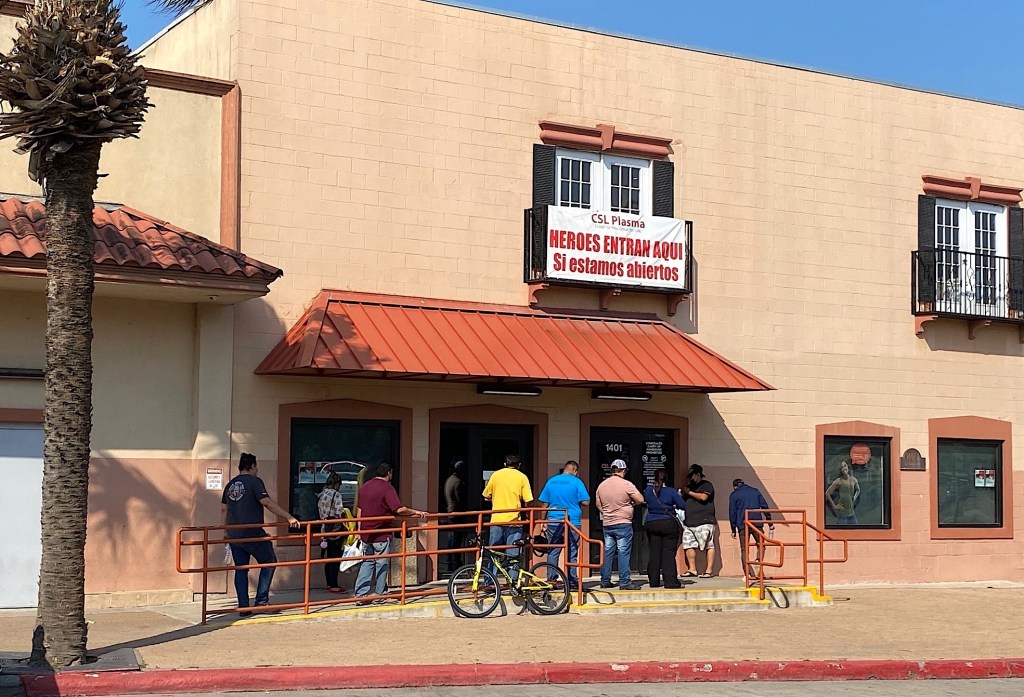
Photo illustration © Michelle Gabel

By JIM McKEEVER

We need a better word, something stronger.

When we talk about divisions in the country and the ways we reinforce and protect our beliefs, we fall back on words like “echo chamber” and “bubble.” 

This is where we prefer to stay — our “safe space,” to use another popular term bordering on cliche. 

But bubbles can pop, and echo chambers don’t conjure up a sense of impermeability or invincibility.

Fortresses. There we go.

That’s what we have surrounded ourselves with — imposing structures with walls thick and high, with strategic vantage points we can hide behind to ward off attackers. 

Let’s throw in a moat. 

Without a bridge or even a drawbridge. 

We need at least one flag, of course, to fly high and let everyone know what we stand for — and what we are willing to fight against.

From the comfort of our fortresses we are secure and superior. 

From up high we can shout down at or fire upon any enemies who dare come close enough to even think about attacking our space, our ideals, our beliefs. How dare they! 

We focus so much on the enemy that we have forgotten about everyone else, those who don’t want to fight but rather are desperate for our help.

How about you?

What is your fortress made of? How high are your walls? How thick? 

What does your flag look like? What does it mean, what does it say about you?

Have you carried your flag into battle, waving it menacingly in the wind?

We all feel damn good about ourselves, so righteous, don’t we?

But here’s the thing. 

Confusion has set in. We haven’t thought things through, haven’t looked far enough into the future — or the past — if at all.

Inside our fortresses, conversations have become arguments. We spend precious time fighting among ourselves. How do we make the walls higher and thicker? Who gets to decide?

While we bicker over who should be in charge, we don’t notice that our flags have begun to tear, that the colors have started to fade.

No one notices the cracks in the walls or that the foundation has begun to crumble. The moat has dried up. We don’t even see the bodies in the dirt.

We are running out of food and water. 

We have plenty of weapons and ammunition, but where have our enemies gone? 

They are over there, trapped in their own crumbling fortresses. 

Who are they, anyway? 

What do we know about them? 

Why were we fighting against them?

What were we fighting for?

Jim McKeever is a co-founder of Sense of Decency.

Photo © Michelle Gabel.

By JIM McKEEVER

If life seems more than a little unsettled these days, here’s one thing you can control. 

We’re running out of time, so here’s the plan: 

Put something in writing that epitomizes your life, your world view, your beliefs — a mantra, of sorts — for your family, friends, loved ones, even people you don’t know or never will meet, to read and ponder.

The catch? It must be 15 words or fewer, and whoever reads it must smile or think fondly of you long after you’re dead.

You can choose a phrase, a favorite saying, a colloquialism, an expression often used by a loved one.

My preference is that you compose something original, but a well-known quote, song lyric or line from a poem, or a variation thereof, would be acceptable.

Why the 15-word limit? 

Brevity not only is the soul of wit, it won’t cost as much if it’s something you want on your tombstone.

Fair enough?

Think about it, and whatever you come up with, please share it in the comments. 

Your parting words, or perhaps your parting shot, could be serious or humorous or somewhere in between. 

Need inspiration?

While I have yet to decide what to leave for posterity, the idea for this assignment came to me during one of my regular morning walks in the local cemetery. 

For years I’ve walked past a tombstone for a family whose members died more than a century ago, but I had never paid attention to the epitaph (not an epithet!) until the other day — “Until the day break, and the shadows flee away,” a biblical verse from the Song of Solomon. 

Then I revisited the gravesite of 19th-century activist Matilda Joslyn Gage, a contemporary of more famous suffragists who eventually distanced themselves from her because of her more inclusive and progressive activism. 

Gage’s 14-word epitaph on her tombstone in Fayetteville, NY reads: “There is a word sweeter than mother, home or heaven. That word is liberty.”

My mind wandered to another gravesite I had visited more than 30 years ago, in County Sligo, Ireland, of poet William Butler Yeats. His epitaph reads, “Cast a cold eye on life, on death. Horseman, pass by.”

I don’t know how many Irish people smile at that or think fondly of Yeats, but I’m sure they argue about what he meant by those 11 words.

I considered choosing, “Time wounds all heels,” the title of a longish letter I wrote to my three sons many years ago in an attempt to dispense whatever wisdom — and to confront my failings — of my life at that time. 

That clever turn of phrase comes from a former journalism professor at The Ohio State University, Walt Seifert, who began every class by writing (in chalk on a blackboard) an “Rx,” a prescription of sorts for life. Or at least for that day. 

I can’t plagiarize a journalism professor, of all people.

I have a shortlist of other possibilities, but I’ll hold off on sharing them for now. 

The clock is ticking. You have homework.

Jim McKeever is a co-founder of Sense of Decency. He wants to be remembered fondly, but is tempted to leave a snarky parting shot, rather than something kind or inspirational.